Learn how to play Riftbound
Everything you need before you sit down for your first game.

The Game
What is Riftbound?
A fast physical trading card game about taking and holding battlefields (cards that sit in the middle of the table). You and your opponent both bring decks. Each turn, you get resources, draw a card, and play units. Send your units into a battlefield where the enemy has units, and you fight. If only your attackers remain, you conquer it and score. In two-player games, reach 8 or more points while ahead to win. Games are usually one-on-one; teams are supported too.
Your Legendsets your deck's two domains and stays in its own zone. Your Chosen Champion is a matching champion unit: it starts face-up in the Champion Zone, ready for you to play by paying its normal costs.
The Six Domains
 FuryAggressive
Aggressive pressure
Darius, Hand of Noxus
 CalmSustain
Sustain and setup
Ahri, Nine-Tailed Fox
 MindDisruption
Disruption and draw
Viktor, Herald of the Arcane
 BodyStats
Large units
Sett, The Boss
 ChaosVolatile
Volatile effects
Jinx, Loose Cannon
 OrderTeamwork
Board teamwork
Leona, Radiant Dawn
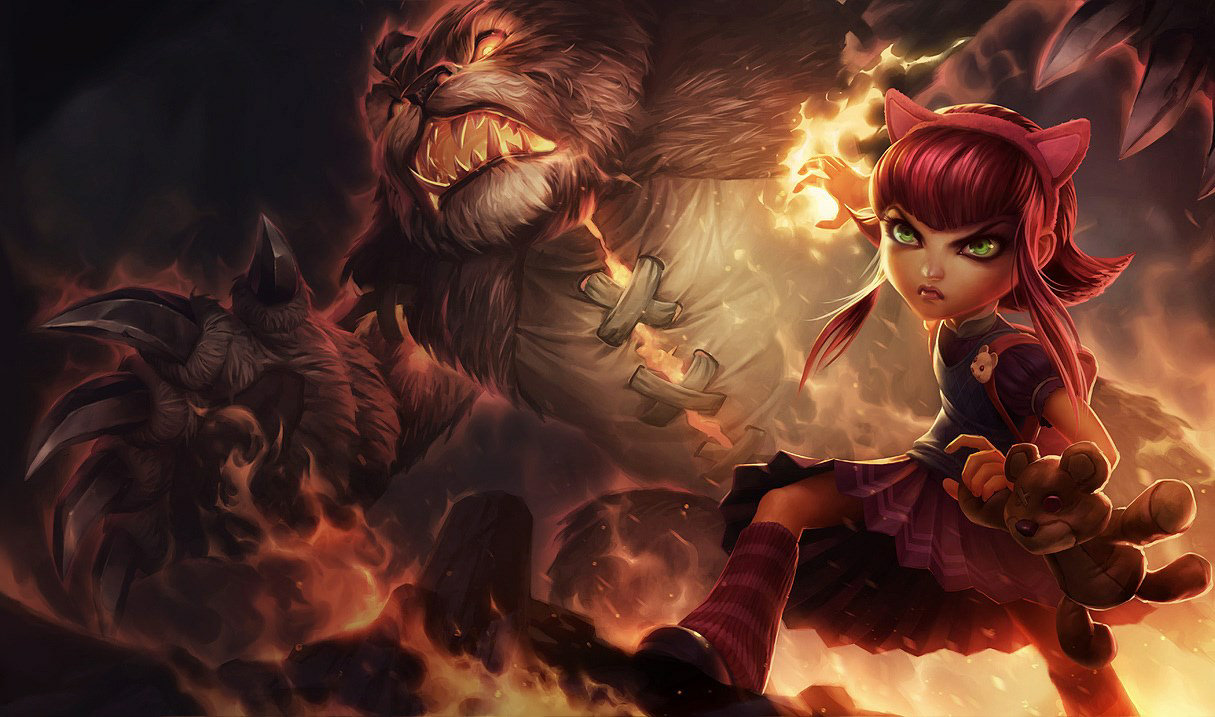
Playing the Game
Five Words You Need to Know
Exhaust
Turn a card sideways. Until readied, it cannot pay another exhaust cost. Exhausted units still fight, and abilities without an exhaust cost can still be used at their normal times.
Ready
Stand your exhausted cards back up. Happens automatically at the start of your turn.
Channel
Bring a Rune from your Rune Deck into play. Normally channel 2 each turn, or as many as remain.
Recycle
Put a card on the bottom of its deck. A Basic Rune's Power ability recycles it as a cost to add 1 Power of its domain. Recycling for another effect does not itself add Power.
Might
A unit's one combat number: how much damage it deals, and how much it takes to kill it.
Setting Up
Your side of the playmat · 40-card Main Deck example
Battlefield Zone
Shared — both players' picks
Legend Zone
Champion ZoneChamp Zone
Base: Units + Gear
Units not at battlefields wait here
Main Deck
39 cards
Rune Deck
12 Runes
Base: Runes
Runes channel into this strip
Trash
Killed & used cards
Track your score along the edge · 8+ and ahead to win (2 players)
Put your battlefields in the Battlefield Zone
Each player brings 3 Battlefields. In a normal game, randomly choose 1. In a best-of-three match, each player chooses 1 instead. Both selected Battlefields sit in the shared zone, and neither is controlled at the start.
Place your Legend and Chosen Champion face-up
Your Champion Legend starts in the Legend Zone. Your Chosen Champion is a matching champion unit that starts face-up in the Champion Zone.
Shuffle your remaining Main Deck
Your Main Deck is at least 40 cards counting your Chosen Champion; sanctioned Constructed uses exactly 40. For a 40-card deck, your Chosen Champion already sits face-up in its Champion Zone (step 2), so shuffle the other 39.
Shuffle your Rune Deck separately
Your 12 Runes are a separate deck. You channel from this pile during the game.
Leave space for Base, Runes, and Trash
Your Base holds units that are not at battlefields. Your Runes enter play from the Rune Deck, and your Trash holds discarded or killed cards.
Randomly pick who goes first, then draw 4
Each player draws a 4-card opening hand. Not feeling it? Once per game, set aside up to 2 cards, draw that many, then the set-aside cards go to the bottom of your Main Deck.
Cards Cost Runes
Step 1: Read the Price Tag
The number is the Energy cost. Colored domain symbols under it are the Power cost. Everything else on the card tells you what you get once it is paid for.
Annie, Fiery

Energy cost
It is the big number in the top-left corner.
5

Power cost
The colored domain symbols under the number set this part of the price.
1

Might
The top-right number is the damage it deals and how much it takes to kill it.
4
Card type
The type line under the art says what you are buying.
Unit
Card text
Your spells and abilities deal 1 Bonus Damage. (Each instance of damage the spell deals is increased by 1.)
Step 2: Spend Runes to Pay It
Energy pays the number

Exhaust a ready Basic Rune (turn it sideways) and it produces 1 Energy. It stays on the table and normally readies at the start of your next turn. You can still recycle it while exhausted.
Power pays the symbols
Recycle a Basic Rune of the matching domain (bottom of your Rune Deck) and it produces 1 Power. That Rune actually leaves the table, so Power is the premium price.
Step 3: Get What You Paid For
During your Main Phase you can play cards from your hand or your Chosen Champion from its zone. Three things your Runes can buy:
Units
Annie, Fiery
Units are fighters. They normally enter exhausted at your Base or a battlefield you control.
Spells
Disintegrate
Spells are one-time effects. After they resolve, they normally go to the Trash.
Gear
Zhonya's Hourglass
Gear cards normally sit in your Base and grant abilities, but Gear with Deploy is played to a battlefield instead. Unlike units, Gear enters play ready.
A card that is both Unit and Gear follows Unit entry rules and normally enters exhausted.
What a Turn Looks Like
01
Awaken
Ready exhausted cards.
02
Beginning
Start-of-turn abilities and Holding points.
03
Channel
Normally channel 2 Runes, or as many as remain. Going second? Channel 3 on your first turn.
04
Draw
Draw 1 card from your Main Deck.
05
Main Phase
Play cards, move units, and start Showdowns.
06
Ending
End-of-turn abilities, then the next player starts.
Your First Turn, Move by Move
- A
Awaken
Ready your exhausted cards. On turn one there's nothing to ready yet, so this takes a second.
- B
Beginning
Handle start-of-turn abilities, then score Hold points for battlefields you control. In this ordinary first-turn example, you have none yet.
- C
Channel
Channel 2 Runes from your Rune Deck into play. (Going second? You channel 3 on your first turn.)
- D
Draw
Draw a card. Your hand is everything you can threaten this turn — and your opponent can't see it.
Main: play your hand
Use Basic Rune abilities to exhaust for Energy or recycle for Power to pay costs.
Units normally enter exhausted in your Base or at a battlefield you control. They cannot make a standard move until ready, but can still fight; card effects may ready or move them.
Non-Unit Gear normally arrives ready; Unit/Gear follows Unit entry rules. Spells normally go to Trash after resolving.
- ✓
Ending: pass
Pass when you have finished your plays. In this example, your unit readies next turn and can move to an empty battlefield. If both players pass without a play, you conquer it. Scoring below explains the once-per-battlefield and final-point limits.
Timing: When Can You Play?
Open state
No spell or ability is waiting on the chain. Resolving means carrying out a spell or ability's effect.
Showdown
The play window when control of a battlefield is contested—even an empty one. In a fight, it happens before combat damage.
Action lets you play in an open Showdown. Reaction also lets you answer a spell or ability before it resolves. Neither interrupts an effect already resolving.
Check Action, Reaction, and Hidden in the keyword reference for the extra windows those cards can use.
For who gets to play next during a Showdown, read Focus and Priority, which walks through a combat step by step.
Fighting (Showdowns)
Step 1: Start the Fight
Combat happens on the board: a unit leaves your Base, lands on a contested battlefield, and the fight resolves where it stands.
First, handle attack and defend triggers and any responses. Then players take turns making plays in the open Showdown. When both pass without a play, the Showdown closes and you move on to combat damage.
The rule every new player misses: a standard move exhausts the unit
READY · UPRIGHT
Can move and fight
a battlefield
EXHAUSTED · SIDEWAYS
Can still fight while exhausted
A standard move costs exhaust, in either direction: to a battlefield or back to your Base. Turn the card sideways to pay that cost. Until it readies, it cannot make another standard move or pay another exhaust cost. Card effects can move exhausted units or ready them sooner than your next turn. Exhausted units still fight at full Might.
Step 2: Trade Damage — Who Wins?
Might is the damage a unit deals and how much it takes to kill it. These examples use real cards, with no abilities or spells changing the numbers. Assume you have not scored this battlefield this turn and have fewer than 7 points.
Assign first, deal together. The attacker decides where to assign combat damage first; the defender then assigns theirs, knowing that allocation. Both sides deal their damage at the same time. Lethal damage does not stop a unit dealing its own hit. Damage does not reduce Might: Darius with 2 damage still has 5 Might.
The attacker wins
Legion Rearguard
DEFENDER · 2
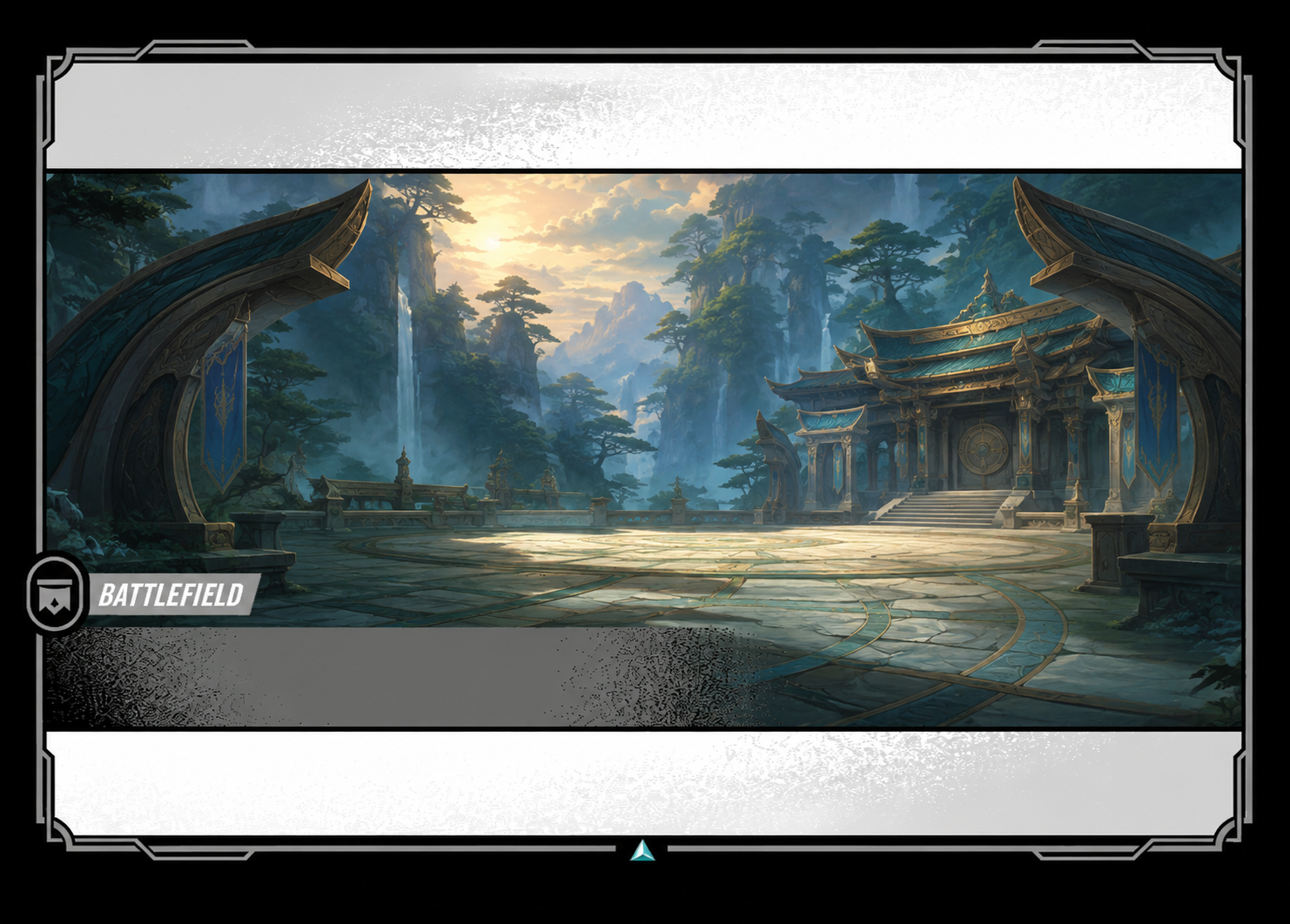 The BattlefieldUnits fight here for control.
Darius, Trifarian
ATTACKER · 5
- ›Darius deals 5. Legion Rearguard has 2 Might, so 5 is lethal: it dies.
- ›Legion Rearguard deals 2 back. Darius has 5 Might, so he survives.
Result: conquer. Legion Rearguard goes to Trash. Darius heals his 2 damage during cleanup but stays exhausted. With only your attacker left, you take control and conquer for +1 point.
The defender holds
Darius, Trifarian
DEFENDER · 5
The BattlefieldUnits fight here for control.Noxus Hopeful
ATTACKER · 4
- ›Noxus Hopeful deals 4. Darius has 5 Might, so he survives the hit.
- ›Darius deals 5 back. Noxus Hopeful has 4 Might: that is lethal.
Result: repelled. A defender is still standing: no conquer, no point. Darius heals up and keeps the battlefield.
Step 3: When Several Units Fight
Scoring Points
Track your score along the playmat edge · 8+ and ahead to win (2 players)
Conquer · +1
Take control of a battlefield: win the fight there, or walk into it empty. Pays out at most once per battlefield per turn.
Hold · +1 per battlefield on your turn
In your Beginning Phase, score 1 point for each battlefield you still control. You do not score Hold points during your opponent's turn.
Find Your Keyword
Base Game · Origins · select a label to explore
Keywords13
Related terms5
Read the label, then the ability
Formal keyword labels use the colors and compact, slanted lettering printed on cards. A number or cost may also appear inside a label; use the value on your card.
Legion The pointed end leads into the text that depends on Legion. Standalone keywords use a flat-ended label. Action and Reaction can also point into a specific ability instead of applying to the whole card.
Upcoming card-text format · Legacy
Riot announced these additional layout changes for Legacy, releasing January 29, 2027:
When I enter, you may then Kill a gear.
The arrow separates the trigger from its effect; the grey highlight identifies a target. An arrow does not make an untagged ability an Action or Reaction. This is an upcoming printed-text example, not a change to the keyword meanings below.
See Riot’s announced card-text updateFour Mistakes Every New Player Makes
Mixing up Conquer and Hold points
Conquer means scoring when you take control; Hold means scoring during your Beginning Phase while you control it. You can score each battlefield only once per turn, and your final Conquer point has an extra restriction. Keep those Scoring rules in mind before counting a point.
Over-committing to one battlefield
Winning a huge fight feels great, but a two-player game has two Battlefields. While your whole army piles onto one, your opponent can move into the other and threaten a Conquer point. Always know what's happening at the Battlefield you're not fighting over.
Recycling Runes without a plan
Recycling a Rune for Power sends it to the bottom of your Rune Deck. It cannot help pay for more plays until you channel it again, which can limit your later turns. This is recycling, not Vendetta's Burn action. Spend Power when it buys you something.
Playing Reactions too late
A Reaction answers a spell or ability BEFORE it resolves. Once your opponent's spell has resolved and the board has changed, the window is closed. If you want to respond, say so while the card is still on the table doing its thing.

Building Your Deck
Anatomy of a Deck
Deck limits
Your Main Deck normally allows up to 3 copies of each named card; Unique and Signature cards have additional restrictions. Your Rune Deck needs exactly 12 Runes in any combination of your Legend's domains.
Main Deck shape
The Main Deck is at least 40 cards counting your Chosen Champion; sanctioned Constructed uses exactly 40. In this 40-card example, the Chosen Champion begins face-up in its Champion Zone, leaving 39 cards to shuffle.
Battlefields
Your deck includes 3 Battlefields. In a normal game, 1 is chosen at random. In a best-of-three match, you choose 1 instead, so two Battlefields are in play.
40-card Main Deck
In this example, your Chosen Champion counts toward the 40.
Chosen Champion
Begins face-up in its Champion Zone.
Cards to shuffle
Units, Spells, Gear—the rest of your Main Deck.
Bring these too
Separate from your Main Deck.
- 1
Legend
Face-up leader
- 12
Runes
Separate Rune Deck
- 3
Battlefields
Locations to fight over
Illustrations show card groups, not a complete decklist.
Every Number That Matters
What You Need to Start
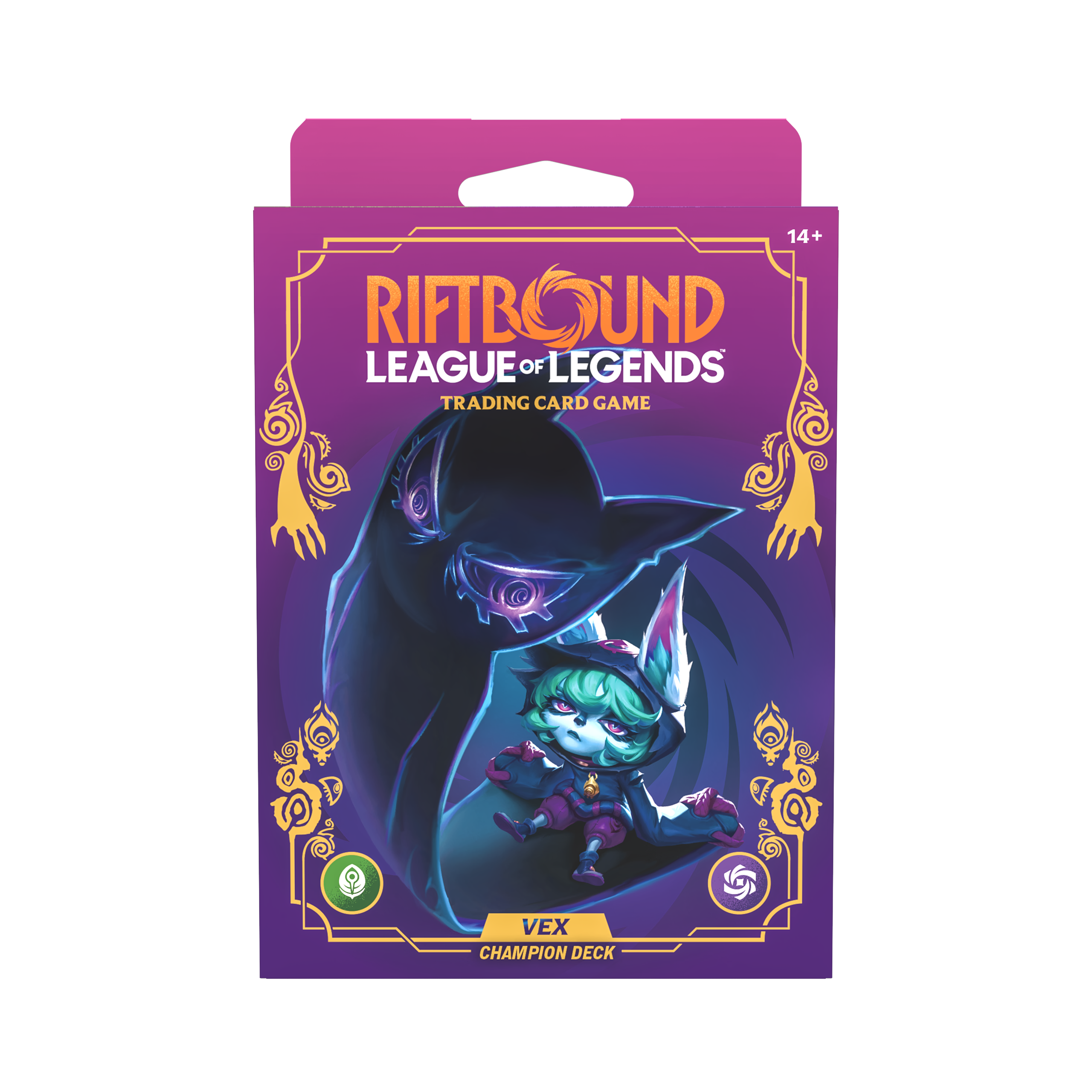
Starter Deck
A Champion Deck is the cleanest way to play your first games. One box is everything a single player needs: the full deck, Runes, Battlefields, Legend, and a paper playmat. Learning with a friend? Grab one each.
Example shown: Unleashed Champion Deck — Vex.
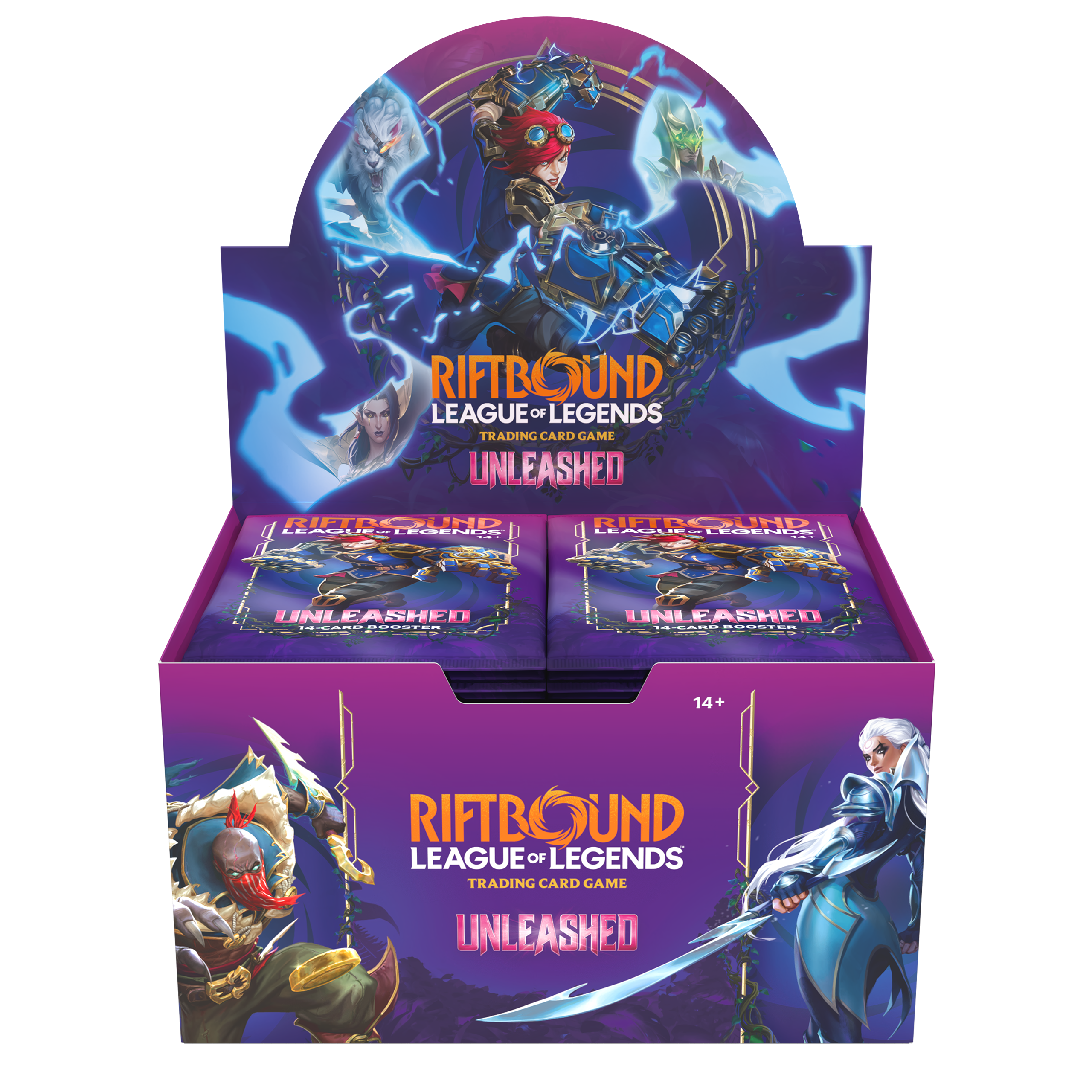
Booster Packs
Booster packs are for expanding once you know what you enjoy playing. Use them to find upgrades, test new domains, and build toward the Legend you actually want.
Example shown: Unleashed booster display.
You Know the Rules. Pick Your Path.
Three ways forward, in whatever order fits you.
Your first games
Find a Starter Legend
See every starter deck from the easiest Legend to the hardest, with what its cards cost as singles.
Your next step
Pick Your Legend
Choose a Legend by play pattern and build a real list, whether it's day one or year one.
Ready to compete
Study the Tier List
Current rankings, recent tournament results, and decks you can open in the builder.